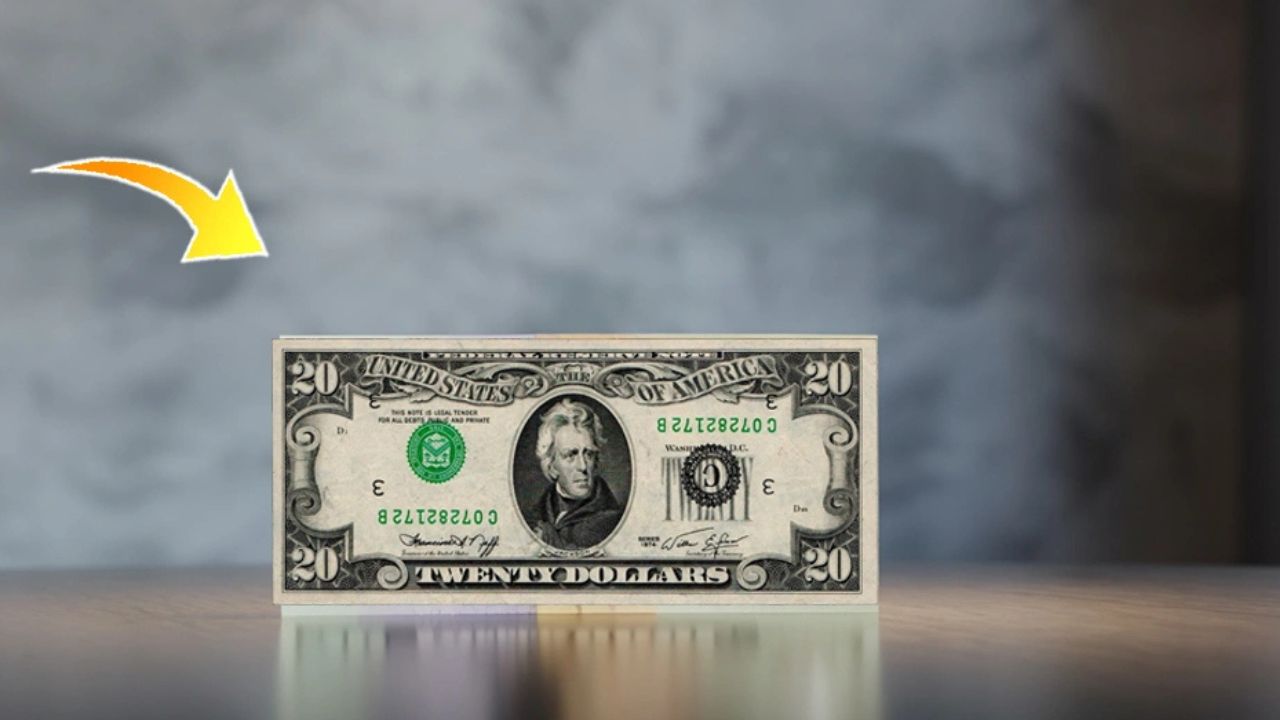
A seemingly ordinary $20 bill from 2017 has taken the numismatic world by surprise after it sold for a staggering $66,000 at auction. What looked like a routine piece of U.S. currency turned out to be a rare printing error that collectors couldn’t resist. Now, many Americans are wondering if they might be holding similar hidden treasures in their own wallets.
The $20 Bill That Became a Jackpot
At first glance, this 2017 series $20 note looked just like any other — complete with Andrew Jackson’s portrait and standard green-and-black ink. But this particular bill had a serious printing flaw that set it apart: a significantly shifted third printing.
This final stage of printing adds the serial numbers and Treasury seal. In this rare case, both were badly misaligned, making the note immediately noticeable to those in the know. Instead of sitting in their normal positions, the elements appeared awkwardly displaced — a mistake that transformed an ordinary bill into a collectible worth tens of thousands of dollars.
Why This Printing Error Is So Valuable
Printing errors on U.S. currency are incredibly rare, especially in modern times with strict quality control at the Bureau of Engraving and Printing. That’s why when a major misprint like this slips through, it becomes a prized item for collectors.
The error on this bill occurred during the “third printing,” the stage where crucial identifying marks are added. When the Treasury seal and serial numbers are misprinted — especially as dramatically as in this case — it signals a one-in-a-million occurrence. That rarity is exactly what drove the final auction price to an eye-popping $66,000.
Could You Have a Valuable Misprint in Your Wallet?
Since news of this high-value bill broke, people across the country have been examining their cash more closely. While most bills are standard, the possibility of finding a rare misprint is real — and it could be worth far more than face value.
What to Look For:
- Misaligned serial numbers: Are the numbers crooked, duplicated, or missing?
- Odd Treasury seal placement: Is the green seal too far off from its usual spot?
- Inverted elements: Are any parts of the bill upside down or flipped?
- Shifted printing layers: Do any design elements look like they were stamped in the wrong place or at an odd angle?
Even minor print defects can add value. However, major and highly visible errors like the one on this $20 bill are the real jackpot items for collectors.
Error Notes Are Gaining Popularity
The world of error currency collecting has grown rapidly in recent years. As stories like this go viral, more people are realizing the potential hidden value in everyday cash. Collectors and auction houses alike are reporting increased interest in modern error notes — some of which have sold for tens of thousands of dollars.
What makes error notes so fascinating is their rarity and unpredictability. Each flawed bill is a piece of history, a glimpse into the usually flawless process of currency production gone slightly wrong — and collectors are more than willing to pay a premium for that uniqueness.
Final Thoughts: Don’t Overlook Ordinary Cash
This story is a powerful reminder that extraordinary value can be found in the most unexpected places. A simple $20 bill, once used in a routine transaction, ended up being a collectible worth over $60,000 — just because of a printing error.
If you’ve got old bills tucked away or cash you haven’t looked at closely, now’s the time. While major misprints are rare, they do happen — and they can turn ordinary money into a once-in-a-lifetime payday.
Frequently Asked Questions
What was the error on the 2017 $20 bill?
The bill featured a dramatically shifted third printing, causing the serial number and Treasury seal to be misaligned and placed incorrectly.
How can I check if my bill has a printing error?
Compare your bill with a standard one. Look for visible misalignments, misplaced or missing serial numbers, seals, or any printing that seems out of place.
Are all error bills worth a lot of money?
No, the value depends on how rare and visible the error is, and the overall condition of the bill. Major errors are worth more.
Where can I sell an error note?
You can contact certified currency dealers, submit the bill to a paper money grading service, or list it through reputable numismatic auction houses.
Also Read: The $1 Bill From 2017 You Shouldn’t Ignore — One Just Sold for $42,000