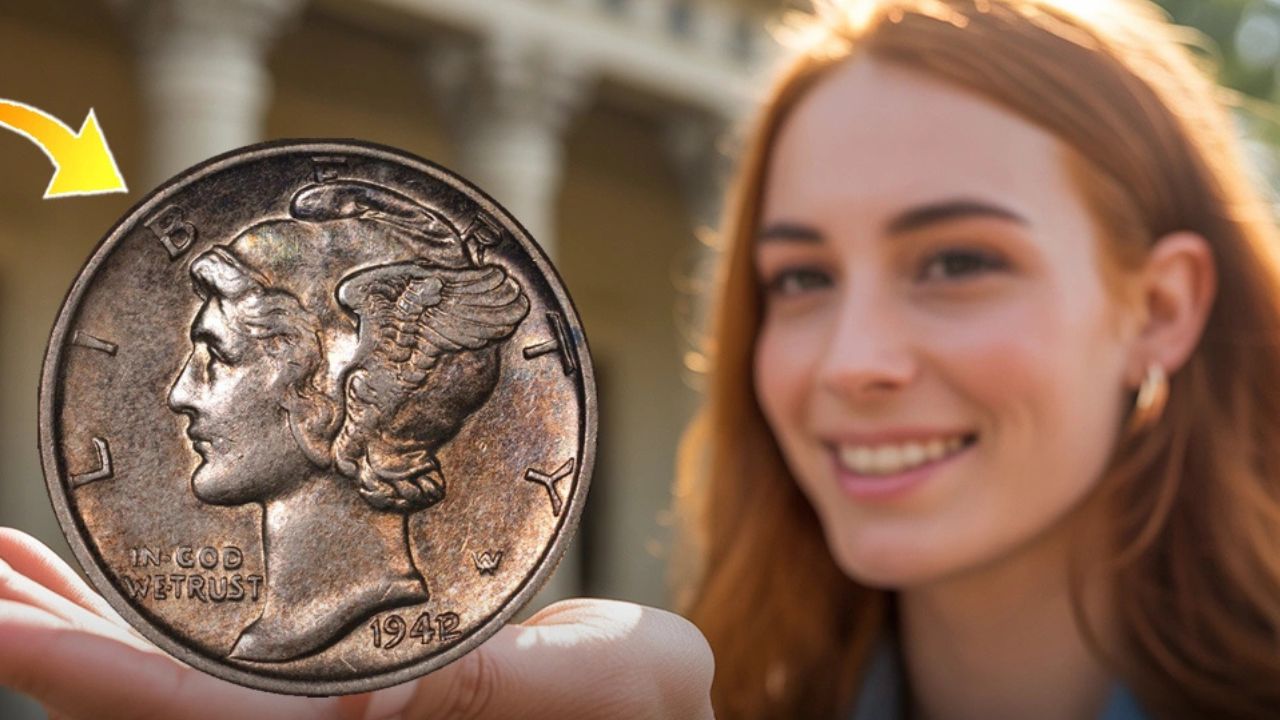
In the world of rare coins, few are as exciting—and potentially life-changing—as the 1942/1 Mercury Dime. This unique overdate error coin has captured the attention of collectors for decades, with some selling for as much as $95,000 depending on condition. But how can you tell if you have one?
Here’s a complete guide to identifying this rare coin, what makes it valuable, and where people are still finding them today.
What Is the 1942/1 Mercury Dime?
The 1942/1 Mercury Dime is an error coin created when a 1942 date was mistakenly punched over a 1941 die during the minting process. As a result, you can see traces of the “1” beneath the “2” in the coin’s date—an unmistakable sign of this rare variety.
This error occurred at both the Philadelphia Mint (no mint mark) and the Denver Mint (marked with a “D”), though the Philadelphia version is considered more common and often more valuable.
Why Is the 1942/1 Mercury Dime So Valuable?
The value of the 1942/1 Mercury Dime comes down to rarity and condition. Only a limited number of these overdate dimes entered circulation before the mistake was discovered. Many surviving coins are heavily worn, making high-grade examples extremely rare—and incredibly valuable.
Uncirculated versions graded MS-65 or higher have sold for up to $95,000 at auction. Even circulated coins in good condition can command thousands, making it one of the most sought-after dimes in American coinage history.
How to Spot the 1942/1 Overdate Error
If you have a 1942 Mercury Dime, here’s what to look for to determine if it’s the rare overdate variety:
1. Inspect the Date
Look closely at the “2” in “1942.” You may notice the top of a “1” peeking out beneath it. This doubling is the most obvious indicator of the error.
2. Use a Magnifier
A 10x jeweler’s loupe or magnifying glass is essential. The overdate is hard to spot with the naked eye, especially on worn coins.
3. Check for Mint Mark
The Philadelphia version has no mint mark, while the Denver version will have a small “D” on the reverse. Both are valuable, but the no-mintmark type is often more in demand.
4. Verify with Experts
If you suspect you’ve found one, send it to a professional grading service like PCGS or NGC for authentication. Certification adds credibility—and value—to your coin.
Where Are These Rare Dimes Being Found?
Believe it or not, the 1942/1 Mercury Dime still turns up in estate sales, coin jars, inherited collections, and even garage sales. Many people don’t realize the value of what they have, especially in older family collections.
If you have old coin albums or unsorted rolls from a grandparent or garage box, it’s worth taking a closer look—you could be sitting on a dime worth thousands.
Real Auction Prices That Turned Heads
Still wondering what this coin is really worth? Here are some real-world auction results that highlight just how valuable it can be:
- MS-65 Full Bands: Sold for $95,000 at a major numismatic auction
- Very Fine (VF-20): Sold for between $1,500 and $2,000
- Lower grades with visible overdate: Still sell for over $500
Clearly, there’s demand across all grades, and collectors are willing to pay top dollar for authenticated coins.
Final Thoughts
The 1942/1 Mercury Dime is more than just a coin—it’s a rare piece of American minting history. With only a limited number in existence, it’s a valuable target for collectors and a potential windfall for anyone lucky enough to find one.
If you come across a 1942 dime, don’t dismiss it too quickly. With the right details and some expert help, it could turn out to be worth far more than ten cents—possibly even $95,000.
FAQs
Q: What is a 1942/1 Mercury Dime?
A rare overdate error coin where a 1942 date was struck over a 1941 die. The result is a visible “1” beneath the “2” in the year.
Q: How rare is the 1942/1 Mercury Dime?
Only a limited number were made before the error was caught. High-grade examples are especially rare and extremely valuable.
Q: How much is a 1942/1 Mercury Dime worth?
Values range from $500 for worn coins to over $90,000 for uncirculated versions with full details.
Q: Where can I get my coin authenticated?
You can send it to top grading services like PCGS or NGC for professional evaluation and certification.