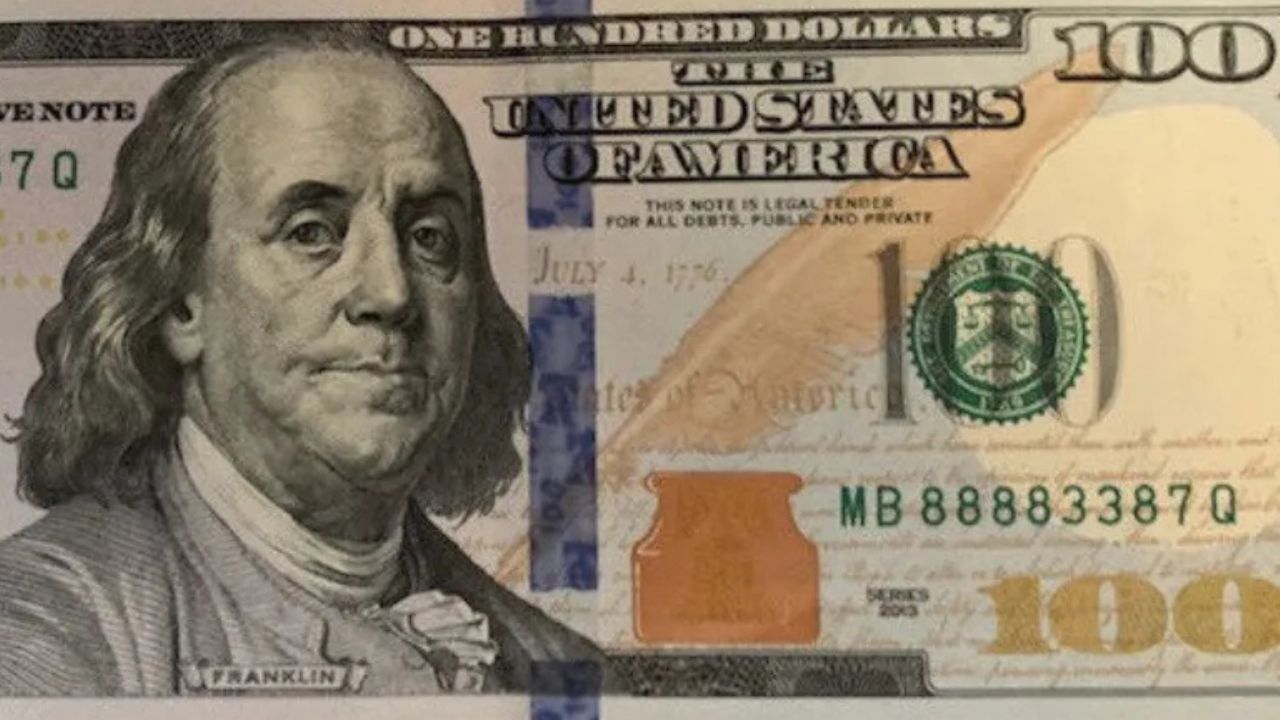
Most people think of a $100 bill as just that — one hundred dollars. But what if the one in your wallet could actually be worth hundreds or even thousands more? If you have a 2013 series $100 bill, it’s time to take a closer look. Due to rare misprints and duplicated serial numbers, some of these bills have become incredibly valuable among currency collectors.
Why the 2013 $100 Bill Series Stands Out
The 2013 series marked a major redesign by the U.S. Treasury. It introduced advanced anti-counterfeiting features such as:
- 3D blue security ribbon
- Color-shifting ink
- A large gold “100” on the reverse
While these enhancements improved security, they also made the printing process more complex—opening the door for rare errors that have since become prized by collectors.
The Misprint That Turned Into a Collector’s Dream
In a highly unusual printing mistake, two different facilities—Fort Worth, Texas, and Washington, D.C.—accidentally printed identical serial numbers on different batches of 2013 $100 bills. This duplication error is incredibly rare and valuable. These bills are now being hunted by collectors, especially those who manage to find both bills from a matching pair.
This kind of error, known as a duplicated serial number, has only been confirmed within specific serial ranges. A matching set can be worth thousands, while even a single bill from the known ranges could fetch hundreds of dollars on the market.
How to Identify a Rare 2013 $100 Bill
If you want to check whether your $100 note is a rare version, here’s what to look for:
1. Series Year
Look beneath Benjamin Franklin’s portrait. It must say Series 2013.
2. Federal Reserve Seal
The bill should have the letter “B” in the Federal Reserve seal, which indicates it was printed for the New York Federal Reserve Bank.
3. Serial Number Ranges
Check if the serial number falls within either of these ranges:
- B00000001 – B00250000
- B03200001 – B09600000
These are the known duplicated serial number ranges. If your note matches, you may be holding something special.
4. Printing Facility
Look for a small letter near Franklin’s portrait. If it says “FW”, it was printed in Fort Worth. If it doesn’t, it was likely printed in Washington, D.C. Matching serial numbers from both facilities make a complete, high-value pair.
What Makes These Bills Valuable?
The value of a rare 2013 $100 bill depends on several important factors:
Condition
Uncirculated or crisp notes are more desirable and command higher prices.
Unique Serial Numbers
Fancy numbers—like repeating digits, palindromes, or very low numbers (e.g., 00000001)—can significantly boost the bill’s value.
Existence of a Matching Pair
If you possess one bill and a collector has the matching duplicate, your note becomes far more valuable. Matched pairs have sold for thousands at auction.
Where to Sell or Get an Appraisal
If you believe you have one of these rare 2013 $100 bills, here’s what you can do:
- Post inquiries on currency collector forums like Collectors Universe or Paper Money Forum
- Check online marketplaces like eBay and Heritage Auctions (but research comparable sales first)
- Contact a certified currency dealer through the American Numismatic Association (ANA)
Avoid selling to general pawn shops unless they specialize in rare currency. Always compare multiple sources before making a sale.
Final Thoughts: Don’t Spend That $100 Bill Just Yet
Before you spend that 2013 $100 note, give it a closer inspection. A simple misprint or duplicated serial number could turn that ordinary bill into a collector’s item worth hundreds—or even thousands—of dollars.
In the world of currency collecting, errors are gold. So next time you’re handed a $100 bill, check the year, serial number, and Federal Reserve seal. You might just be holding onto a hidden treasure.