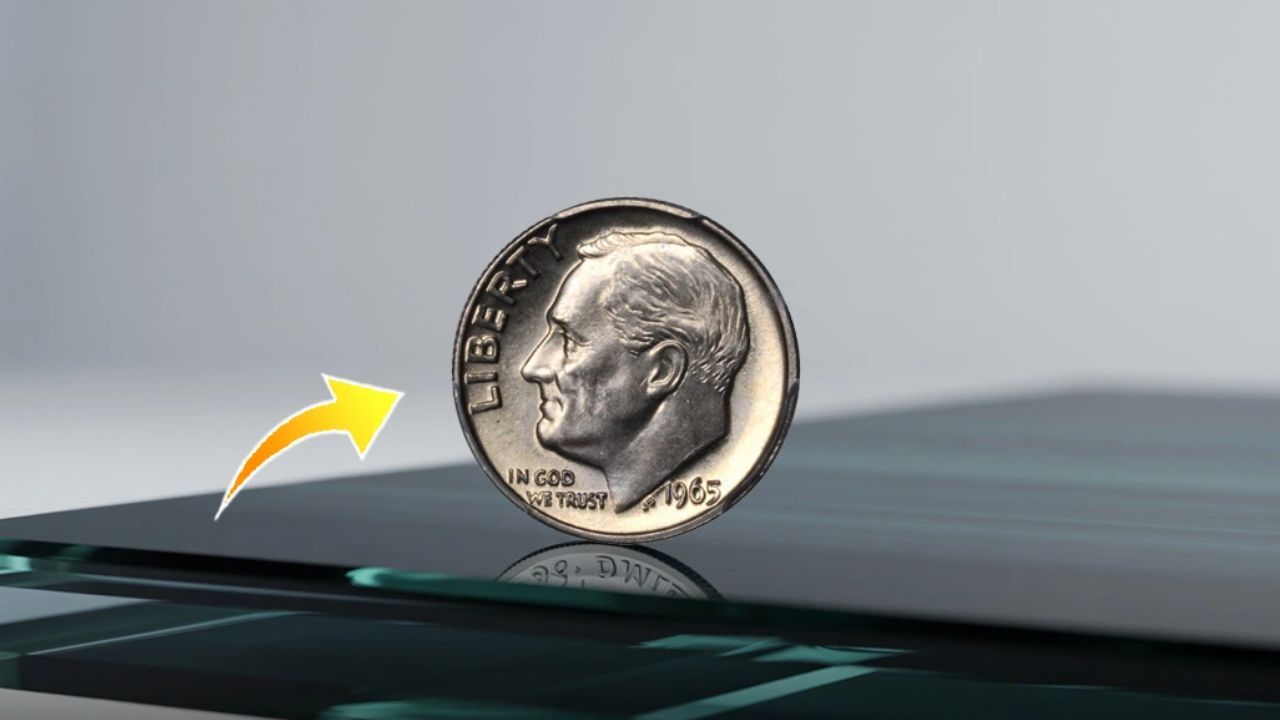
What if a simple ten-cent coin in your change jar was worth over half a million dollars? That’s exactly what happened when a 1965 Roosevelt dime with no mint mark reportedly sold for an astonishing $635,000. And the most exciting part? It could still be out there in circulation.
This incredible sale has sent waves through the numismatic world and reignited interest among collectors and everyday Americans alike. Here’s why this rare dime matters — and how to spot one yourself.
Why the 1965 Roosevelt Dime Is So Important
To understand the buzz, you need to rewind to 1964. At that time, U.S. dimes were made of 90% silver. But due to rising silver prices and cost concerns, the U.S. Mint transitioned to a clad composition — a copper-nickel blend — starting in 1965.
Alongside the metal change, the Mint also temporarily removed all mint marks from coins between 1965 and 1967 to discourage hoarding from specific mints. This means all 1965 Roosevelt dimes should be clad and carry no mint mark.
But a few rare dimes tell a different story.
The Rare Silver Error Worth $635,000
The dime that sold for $635,000 is believed to be the result of a silver planchet error. This means a leftover silver blank from 1964 was mistakenly used to mint a 1965 coin — a rare mistake that should have been impossible under normal conditions.
What makes this coin even more valuable is the fact that it’s:
- Struck in silver
- From 1965
- Has no mint mark
- In Mint State condition
Only a handful of these rare error dimes are known to exist, and each new discovery tends to push prices even higher.
Who Bought the Coin—and Why It Matters to You
While the buyer’s identity hasn’t been publicly revealed, numismatic experts confirm that the coin was authenticated and sold through a private auction involving high-end collectors. Grading services classified the coin as Mint State, meaning it had never been heavily circulated.
But here’s what matters most: there could be more of these dimes still in circulation. That means your pocket change, coin rolls, or old jars might be hiding a treasure worth thousands — or hundreds of thousands — of dollars.
How to Identify a Valuable 1965 Dime
Think you might have one of these rare dimes? Here’s what to look for:
1. Date and Mint Mark
Check the date: it should be 1965. There should be no mint mark near the torch on the reverse side.
2. Color and Luster
Silver coins have a brighter, shinier, and whiter appearance compared to copper-nickel clad dimes, which appear duller or grayer.
3. Sound Test
Drop the dime gently on a hard surface. Silver coins produce a high-pitched ringing sound, while clad coins make a duller, flat sound.
4. Weight
Use a precise digital scale. Silver dimes weigh approximately 2.5 grams. Clad dimes weigh around 2.27 grams. That slight difference can reveal the metal composition.
5. Professional Grading
If you think you’ve found a silver 1965 dime, have it evaluated by a reputable service like PCGS or NGC. Professional grading can confirm authenticity and dramatically increase resale value.
The Rise of Error Coins in the Collectible Market
Mint errors are quickly becoming one of the most in-demand niches in the coin collecting world. What were once seen as production flaws are now considered rare and valuable pieces of American history.
As more collectors enter the market and prices climb, finding a true mint error like the 1965 silver dime has become the ultimate prize.
Final Thoughts
The recent $635,000 sale of a 1965 Roosevelt dime proves that not all valuable coins are locked away in museums or safes. Some are still in circulation, waiting to be discovered in your wallet or spare change.
So next time you get coins back at the store or dig into a coin roll from the bank, take a closer look — because a ten-cent piece could turn into a life-changing payday.
FAQs
Q: Are all 1965 dimes valuable?
A: No. Only those mistakenly struck on silver planchets are rare and valuable. Most 1965 dimes are clad and worth face value.
Q: How can I tell if my dime is silver?
A: Look for a brighter shine, do the sound test, or weigh it. Silver coins weigh 2.5g; clad ones are about 2.27g.
Q: Is a 1965 dime with no mint mark rare?
A: Not by itself — all 1965 dimes lack mint marks. But if it’s also silver, it becomes extremely rare.
Q: Where can I get my coin appraised?
A: Trusted services include PCGS, NGC, or a certified numismatic dealer near you.
Q: What’s the best way to store a rare coin?
A: Use acid-free holders, avoid touching the surface, and store in a cool, dry place away from sunlight or moisture.