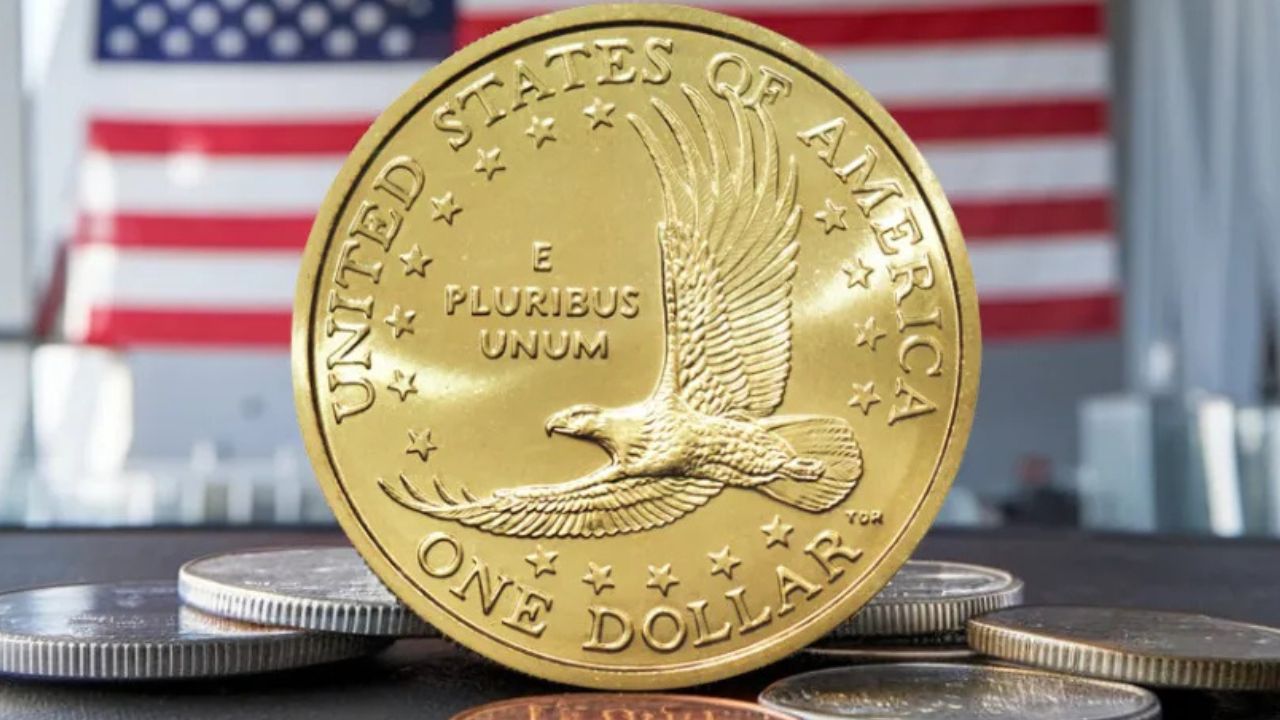
One of America’s most surprising modern coin treasures is still out there — hiding in plain sight. A rare version of the 2000 Sacagawea Dollar has stunned collectors by selling for up to $12,000, and yes, it might still be sitting in a drawer, change jar, or vending machine near you.
This guide will help you identify the rare “Cheerios” Sacagawea Dollar, explain why it’s valuable, and show you exactly what to look for.
What Is the Sacagawea Dollar?
Introduced in 2000, the Sacagawea Dollar was designed to honor the Native American woman who guided the Lewis and Clark expedition. It replaced the Susan B. Anthony dollar and features Sacagawea with her infant son on the obverse, and an eagle soaring on the reverse.
Its distinctive golden color comes from a manganese-brass alloy, but despite its eye-catching appearance, the coin never gained widespread use in circulation.
The $12,000 Cheerios Sacagawea Dollar
The most valuable version of this coin is known as the “Cheerios” Sacagawea Dollar. In 2000, General Mills included 5,500 of these coins in boxes of Cheerios cereal as a promotional giveaway.
While they may look identical to regular coins at first glance, these Cheerios versions have a special design detail that sets them apart — and makes them incredibly valuable to collectors.
What Makes It Different?
The difference lies in the reverse side. The eagle’s tail feathers on the Cheerios Dollar have a sharper, more detailed pattern than standard coins. These are considered “pattern coins,” struck early in the production process using a different reverse design.
Because only a fraction of the 5,500 Cheerios coins have been identified with this design, they’ve become rare collector’s items. One example in high-grade condition has sold for as much as $12,000.
How to Spot a Cheerios Sacagawea Dollar
Think you might have one of these golden gems? Here’s how to tell:
- Check the Date: The coin must be dated 2000.
- Examine the Tail Feathers: On the reverse, look closely at the eagle’s tail. Cheerios Dollars have distinctly separated, detailed feathers compared to the smoother look of regular versions.
- Business Strike, Not Proof: These coins are regular strikes — not mirror-like proof coins.
- Condition Counts: A coin in mint-state condition (MS-65 or higher) can command the highest prices.
If you believe you’ve found one, it’s essential to have it authenticated by a trusted grading company like PCGS or NGC.
Are Cheerios Dollars Still in Circulation?
Surprisingly, yes. Many people who received the promotional coins in 2000 didn’t realize they were special and may have spent them as regular currency. This means some of these rare coins are still out there today, potentially in everyday change.
Collectors continue to report finding 2000 Sacagawea Dollars in circulation — and while most are ordinary, the rare Cheerios version remains the ultimate hidden prize.
Other Rare Sacagawea Coins to Watch For
The Cheerios Dollar isn’t the only valuable version of this coin. Here are two other highly collectible varieties:
- 2000-P “Wounded Eagle”: A rare die error causes a raised line across the eagle, resembling a wound. These can be worth hundreds to thousands depending on condition.
- 2000-P Mule Error: One of the most famous modern coin errors, this version features the obverse of a Washington quarter paired with the Sacagawea reverse. With fewer than 20 confirmed, these can sell for $100,000 or more.
Final Thoughts: Check Your Pocket Change
You don’t have to be a professional numismatist to discover a valuable coin. All it takes is a curious eye and a bit of luck. Whether it’s from a cash drawer, change machine, or forgotten cereal box, a $12,000 Sacagawea Dollar could be closer than you think.
So the next time you receive a golden dollar coin, check the year — and look twice at that eagle. It might just be the collector’s jackpot still circulating across the country.
Frequently Asked Questions (FAQs)
Q: How many Cheerios Sacagawea Dollars were made?
A: Around 5,500 were distributed in cereal boxes, but only a small portion had the rare tail feather design.
Q: Are regular 2000 Sacagawea dollars worth anything?
A: Most are only worth face value unless they’re in mint condition or have unique errors.
Q: How can I confirm if my coin is rare?
A: Send it to a grading company like PCGS or NGC for professional verification and authentication.
Q: Where can I sell rare coins?
A: Trusted options include certified coin dealers, auction houses, and online platforms like eBay — but only after getting your coin graded.